Nearly every crowd-control problem comes down to three families of stanchion, and picking the wrong family is the mistake that shows up in every photo of the event afterward. Retractable-belt posts, post-and-rope sets, and post-and-chain barriers all keep people in a line, but they are built for different rooms, different budgets, and different amounts of abuse. This is a straight comparison of the three, with the numbers you need to size a run, so you order the type that fits the space instead of the one that was easiest to find.
Retractable-belt stanchions: the queue workhorse
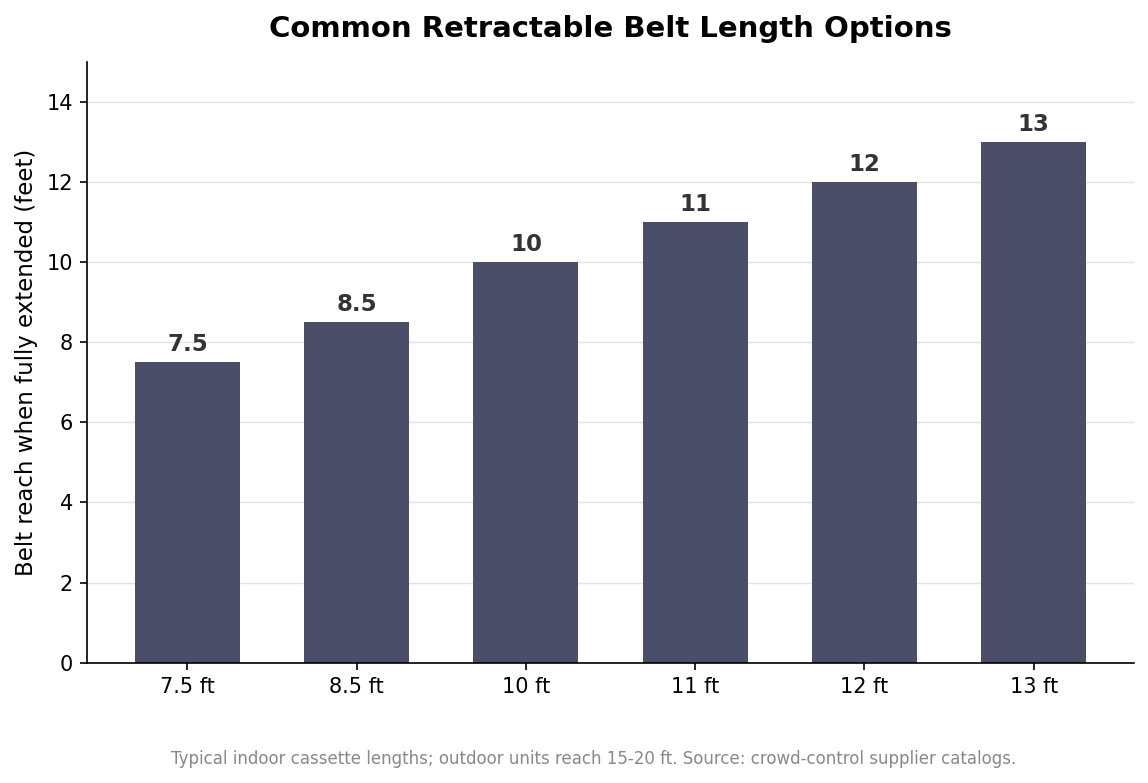
A retractable-belt stanchion is a weighted post with a belt cassette built into the top; you pull the woven nylon belt out and clip it to the next post. It is the default for airports, retail checkouts, banks, and any high-traffic line because one person can reconfigure an entire queue in minutes. A typical indoor unit stands about 40 inches tall on a 14-inch base, weighs roughly 20 pounds, and uses a 2.5-inch-diameter post. The belt itself is usually about 2 inches wide and comes in lengths from 7.5 up to 13 feet, with outdoor models reaching 15 to 20 feet. Four-way belt heads, where each post can receive belts from several directions, are what let you build mazes and switchbacks from the same hardware. Better cassettes include a controlled-retract brake so the belt does not snap back and injure someone, and many belts can be printed with a repeating message such as caution or please wait here, which turns the barrier into low-cost signage. When you compare units, the base weight and the brake matter more than the finish: a light base tips in a busy line, and a belt without a brake becomes a hazard the first time someone lets go.
Post-and-rope: the hospitality look
Post-and-rope, often a polished or brass post with a velvet or twisted rope, is the choice when the barrier is part of the decor rather than just traffic management. Hotels, theaters, galleries, VIP entrances, and banquet rooms use it because it reads as formal and intentional. The tradeoff is flexibility: ropes are a fixed length, commonly around 5 to 6 feet, and hang from fixed end hooks, so you cannot stretch a run or reroute it the way a retractable belt allows. You buy the exact geometry you plan to use, and changing the layout means buying more posts and ropes. It also asks more of housekeeping, because velvet shows wear and the metal wants regular polishing to keep the upscale impression it was chosen for.
Post-and-chain and plastic barriers: industrial and outdoor
Where the setting is a parking lot, a warehouse, a construction edge, or a temporary outdoor line, post-and-chain and molded plastic barriers take over. Plastic stanchions with a lightweight chain are the least expensive option and the most weather-tolerant, and many use a base that fills with water or sand so they stand up to wind that would topple a 20-pound indoor post. They are not subtle, and that is the point: high-visibility colors and a rugged chain communicate keep out far better than a velvet rope. For anything genuinely outdoors, prioritize a weighted or fillable base and a UV-stable plastic over the look of the post.
Sizing the run: belt length and post count
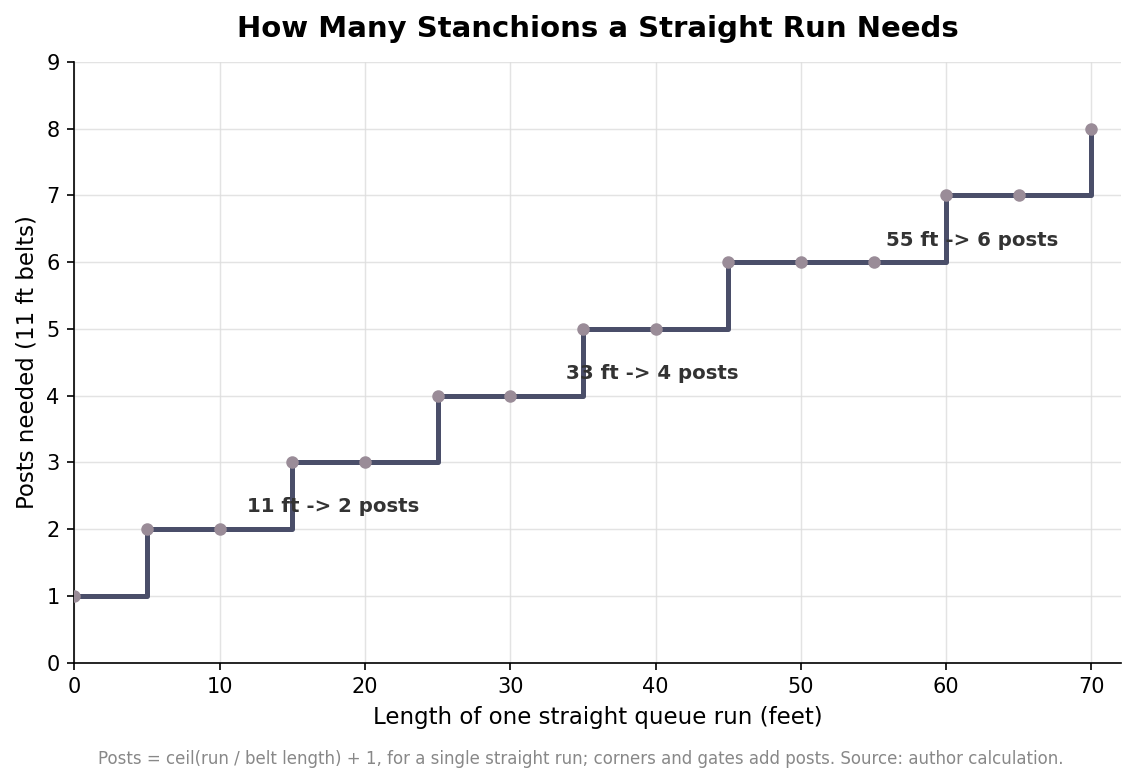
Once you have the type, the second question is how many posts a line actually needs, and this is where orders come up short. For a single straight run, the count is the run length divided by the belt length, rounded up, plus one for the closing post. An 11-foot belt covers a 33-foot run with four posts; a 55-foot run needs six. Every corner, gate, or pay point adds a post beyond that formula, and it is worth buying one or two spares because a broken belt cassette takes a post out of service entirely. Erring toward more posts and shorter belt spans also keeps the belts from sagging, which both looks better and holds the line more firmly.
What drives the cost of each type
The three families sit at different points on the cost scale, and it helps to know why before you shop. Molded plastic post-and-chain units are the lowest-cost option, which is why they dominate parking and construction use. Indoor retractable-belt stanchions typically sit in the middle, with the cost moving up or down with base quality, belt length, and whether the head is four-way. Post-and-rope tends to cost the most once you add the rope itself, especially in polished or brass finishes, because you are paying for appearance and a heavier post. Treat this as a general ordering rather than a quote, and remember that base quality and belt mechanism, not the visible finish, are where a cheap unit usually gives itself away over a year of daily use. For an exact figure on a bulk order, request a free mockup and quote from Customized Stanchions.
Which type to choose
Match the type to the room and the traffic, not to a photo you liked. If the line moves and changes shape through the day, buy retractable belt, and spend the extra for four-way heads and the belt length that matches your typical run. If the barrier is on camera at a formal venue and rarely moves, post-and-rope earns its higher upkeep by looking the part. If it lives outdoors or takes real physical abuse, post-and-chain or plastic with a fillable base is the only one of the three that will survive. Many venues end up owning two families, retractable belt for working queues and rope for the front-of-house impression, and keep them strictly separated so the fast, flexible hardware never has to stand in for the elegant one. Decide the environment first, size the run second, and the specific finish and signage become the easy part.