Custom stanchions last longest when posts are wiped with mild soap, printed belts are cleaned while extended and retracted slowly, and every set is stored dry with padding between posts. Customized Stanchions prints belts from approved artwork kept on file, so when a well-used lane finally wears out, matching replacements are simple to reorder from a minimum of 12.
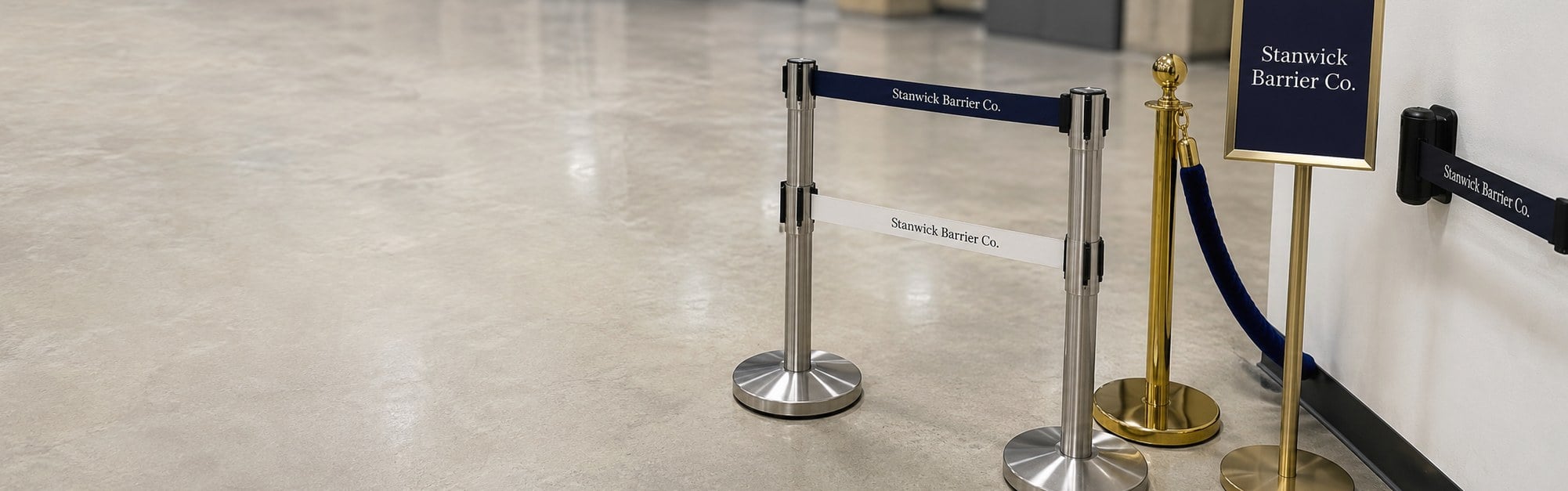
- Clean posts with a microfiber cloth, warm water and mild soap
- Wipe printed belts while extended and let them dry before retracting
- Walk belt clips back to the cassette instead of letting go
- Store posts dry, padded and grouped by belt message
- Matching reorders from a minimum of 12, free mockup within 24 hours
How do you clean custom stanchions without damaging the finish?
Clean custom stanchions with a soft microfiber cloth, warm water and a few drops of mild dish soap, then dry the posts straight away. That routine lifts fingerprints, dust and spilled drinks from polished, brushed and powder-coated finishes without dulling them. Skip abrasive pads, scouring powder and strong solvents, which leave haze and fine scratches on metal posts.
Work from the top cap down to the base so dirty water never runs over a section you already wiped. Pay extra attention to the belt cassette housing and the top of the post, because those are the spots staff and guests touch most often. A second dry cloth prevents water spots, which show up quickly on polished chrome and dark finishes.
- Polished finishes: wipe and buff dry; a non-abrasive metal polish can restore shine now and then.
- Brushed finishes: wipe along the direction of the grain so the texture stays even.
- Powder-coated finishes: soap and water only; avoid solvents that can soften the coating.
- Bases: clean the underside occasionally so grit does not get dragged across the floor.
If you are still choosing a finish, read the Customized Stanchions guide on finishes that suit the room, then plan your cleaning routine around the finish you pick.
What is the right way to clean printed stanchion belts?
Printed stanchion belts clean best while extended: pull the belt out, lock it in place against a receiver and wipe both faces with a damp cloth and mild soap. Let the belt dry fully before it retracts. Rolling a wet belt back into the cassette traps moisture, which can leave marks on the print and stain the fabric over time.
Avoid bleach, harsh degreasers and stiff brushes on branded belts. They can fade a logo or rough up the weave so the belt looks worn long before it should. For sticky spills, dab rather than scrub, and work from the edge of the stain inward so the mark does not spread across your printed message.
Retraction is where most belt wear happens. When staff let go of an extended belt, it snaps back at full speed and the clip can strike the post, chip a finish or kink the belt. Train your team to walk the clip back to the cassette. That one habit keeps printed message belts flat, readable and on brand for much longer. Customized Stanchions can also print replacement belts from your approved artwork when a heavily used lane finally needs new ones.
How should velvet ropes and rope stanchions be cared for?
Velvet ropes need gentler care than belts: brush them lightly with a soft clothes brush to lift dust and restore the pile, and spot-clean marks with a barely damp cloth. Never soak a velvet rope or put it through a washing machine, since water can crush the pile and tarnish the metal end hooks.
Store velvet ropes hanging or loosely coiled, never folded tight or stacked under heavy posts. Creases in velvet are hard to remove and show up immediately under lobby lighting, which is exactly where velvet rope stanchions tend to be used. Polish the end hooks with the same cloth you use on the posts so the metal matches.
- Brush velvet ropes in one direction after each event.
- Keep ropes away from damp storage rooms and direct heat.
- Hang ropes on hooks or lay them in a long bin between uses.
- Check the hook fittings for looseness before guests arrive.
Hotels, theaters and galleries that run velvet rope stanchions every day often keep a spare rope or two from the same order, so a marked rope can rotate out for cleaning without breaking up a matched set.
Which stanchion materials hold up best in high-traffic spaces?
For high-traffic spaces, stainless steel posts with retractable belts are the most forgiving combination, while polished brass and velvet ropes ask for more care in exchange for a dressier look. Outdoor and fillable stanchions are built to handle weather and wind that would wear down indoor posts. Matching the material to the traffic is the easiest way to extend the life of any order.
| Stanchion type | Where it lasts longest | Main care task |
|---|---|---|
| Retractable belt stanchions | Banks, retail checkouts, airports, busy lobbies | Controlled retraction, belt wipe-downs |
| Velvet rope stanchions | Hotel lobbies, theaters, galleries, VIP entrances | Brushing ropes, polishing posts |
| Sign frame stanchions | Entrances, wayfinding, event check-in | Cleaning frame faces, swapping signs |
| Wall-mounted barriers | Corridors, service doors, narrow aisles | Checking wall fixings, belt care |
| Outdoor and fillable stanchions | Patios, sidewalks, pool decks, venues | Rinsing grit, draining and drying |
Customized Stanchions can mix several of these styles in one order, so the hardest-working lane gets the most durable option while the front-of-house entrance keeps its premium look.
How do you store custom stanchions between events?
Store custom stanchions upright or lying flat in a dry room, with each post separated by a blanket, a padded divider or the original packaging. Posts that rattle against each other in a cart chip and scratch each other faster than a year of daily use. Belts should be fully retracted and dry before storage.
Keep the bases off damp concrete where possible. Moisture under a heavy base can mark the floor of a storage room and, over time, affect the finish on the base itself. If the stanchions travel between venues, a dedicated cart or padded cases protect both the posts and the printed belts in transit.
- Wipe each post and belt clean before it goes away.
- Let belts dry fully, then retract them slowly.
- Separate posts with padding so finishes never touch.
- Group sets by message, such as event belts and everyday belts.
- Label each storage bin with the location or event it belongs to.
Labeling matters most for venues that own more than one belt message. A clearly marked bin means a gala crew never sets out the everyday check-in belts by mistake, and the branded event set stays in top condition for the nights it is meant for.
How can you protect floors and stanchion bases at the same time?
The base is the part of a stanchion that takes the most abuse, because it is dragged, bumped by carts and set down hard during every setup. Lift stanchions to move them instead of sliding them, and keep the underside of each base free of grit. Those two habits protect your floors and the base finish together.
Many stanchion bases come with a protective pad underneath. Check those pads during routine cleaning and replace any that are torn, flattened or missing. A worn pad lets metal touch the floor, and a small stone trapped under a base can scratch stone, wood or polished concrete in a single move.
For permanent queue layouts, consider whether a wall-mounted barrier can replace a freestanding post at the ends of a line. Fewer moving bases means fewer chances to scuff the floor, and wall units are rarely knocked over by passing traffic. Customized Stanchions can help you plan a mixed layout when you request a quote, and the free mockup shows both styles carrying the same printed belt.
What does a simple stanchion maintenance routine look like?
A simple stanchion maintenance routine splits into daily, weekly and occasional tasks, so no single job takes more than a few minutes. Daily tasks keep the line looking clean for guests. Weekly checks catch loose parts and worn belts early. Occasional deep care restores the finish and keeps the whole set matched.
| How often | Task |
|---|---|
| Daily | Wipe top caps and cassettes, straighten the line, retract belts gently at close |
| Weekly | Check belt clips and receivers, look for fraying or fading, clean sign frame faces |
| Monthly | Inspect base pads, polish posts, brush velvet ropes, rinse outdoor posts |
| Before big events | Pull the event set, test every belt, swap in spares for anything worn |
Assign the routine to one person or shift so it actually happens. A two-minute check before doors open is far cheaper than discovering a jammed cassette in front of a waiting crowd.
When is it time to replace belts or reorder matching stanchions?
Replace stanchion belts when the print has faded, the edges are fraying, or the belt no longer retracts smoothly. Reorder posts when finishes are chipped beyond polishing, bases are bent, or your layout has grown. Swapping worn parts early keeps a branded queue looking deliberate instead of tired.
Because Customized Stanchions keeps your approved design on file, replacement belts and extra posts can match the original order instead of looking like a patch job. Reorders follow the same process as a first order: you confirm the details, receive a free mockup within 24 hours, pay nothing until you approve the design and receive the stanchions in about 2 weeks. The minimum order is 12, so many venues combine replacement belts, spares and expansion posts into one reorder.
A rebrand, a new seasonal message or a fresh location is also a natural time to refresh. Printed message belts can carry updated wording while the posts stay the same style, so the new belts sit naturally alongside stanchions you already own.
Frequently asked questions
Can custom stanchion belts be washed in a washing machine?
Custom stanchion belts should never go in a washing machine, because the belt is wound inside a spring cassette that is built into the post. Wipe the belt while it is extended and locked to a receiver, using a damp cloth and mild soap, then let it dry fully before retracting. Customized Stanchions prints belts that hold up to this kind of routine wipe-down.
Which cleaning products should be kept away from stanchion posts?
Stanchion posts should be kept away from bleach, ammonia-based glass cleaners, scouring powders, steel wool and strong solvents. These products can haze polished finishes, scratch brushed metal and soften powder coating. A microfiber cloth with warm water and a little mild dish soap handles nearly every everyday mark, and a non-abrasive metal polish covers the occasional deep clean.
How can staff stop retractable stanchion belts from snapping back?
Retractable stanchion belts last longer when staff walk the clip back to the cassette instead of letting go. A belt that snaps back at full speed can chip the post finish, kink the belt and strain the spring. Customized Stanchions recommends making controlled retraction part of every closing routine, especially at busy checkout lanes and lobby lines.
Does a brass stanchion finish need more care than stainless steel?
Brass stanchion finishes usually need more frequent polishing than stainless steel to keep their warm shine, especially where many hands touch the top caps. Stainless steel is more forgiving in busy lobbies and checkout areas. Both finishes stay attractive with regular wipe-downs, so the choice often comes down to the look of the room and how much care your team can give.
How should outdoor stanchions be cleaned after a wet or dusty event?
Outdoor stanchions should be rinsed with clean water after a wet or dusty event to remove grit, then dried before storage. Fillable bases should be drained if they will sit unused for a long time. Printed belts on outdoor stanchions need the same extended wipe-down as indoor belts. Customized Stanchions offers outdoor and fillable stanchions designed for this kind of use.
Can faded stanchion belts be replaced without buying new posts?
Faded stanchion belts can often be replaced while the original posts stay in service, depending on the post style and cassette. Customized Stanchions keeps your approved artwork on file, so new belts can match the original logo and message. Share the post style and quantity in a quote request and the team will confirm what fits before you approve anything.
Is it safe to store stanchions in a garage or basement?
Stanchions can be stored in a garage or basement if the space stays dry and the posts are protected from each other. Damp air can mark bases and encourage mildew on velvet ropes, so raise posts off bare concrete and keep belts fully dry before retracting. Padding between posts prevents chips and scratches when the storage room gets crowded.
How often should velvet ropes on stanchions be brushed?
Velvet ropes on stanchions look best when brushed lightly after each event or each week of daily use. A soft clothes brush lifts dust and restores the pile so the rope looks full under lobby lighting. Customized Stanchions suggests keeping a spare rope from the same order, so one can rotate out for spot-cleaning without breaking up a matched set.
What should be checked on stanchions before a big event?
Stanchions should be checked before a big event by extending every belt, testing every clip and receiver, and confirming that event belts carry the right message. Look for loose top caps, worn base pads and fingerprints on polished posts. Swap any worn unit for a spare so the line looks complete when guests start arriving.
Do sign frame stanchions need special cleaning?
Sign frame stanchions need the frame face cleaned along with the post, using a soft cloth and a cleaner that is safe for the frame material. Remove the printed sign first so moisture never reaches the paper or card. Customized Stanchions sign frame stanchions let staff change signs quickly, which also makes regular cleaning of the frame easy.
Can stanchion posts be repainted or refinished at the venue?
Stanchion posts are better replaced than repainted at the venue, because a brush or spray touch-up rarely matches a factory finish and can peel with handling. Light marks on polished metal often polish out. For chipped or bent posts, Customized Stanchions can produce matching replacements from your original order details, with a free mockup within 24 hours.
How can a venue keep several stanchion sets organized in storage?
A venue can keep several stanchion sets organized by storing each set in its own labeled bin or cart, grouped by belt message, location or event. Clean and dry every post before it goes away, and note any worn parts on the label. That system stops event belts from appearing on the everyday line and makes it obvious when a reorder is due.
Get a free mockup for your stanchions
Send your logo or idea and the quantity you have in mind. Customized Stanchions returns a free mockup within 24 hours, you approve the design before anything is produced, and standard turnaround is about two weeks with faster options available. Get a custom quote.